


How Much Does It Cost to Move Out of State From Nashville
Moving out of state from Nashville is a big financial decision, and most people have no idea what to expect until they're already deep into the process. The numbers vary widely depending on where you're going, how much you're moving, and what services you need. Getting a clear picture upfront saves you from sticker shock and bad decisions.

The short answer: an out-of-state move from Nashville typically costs between $1,500 and $7,000 or more for a full-service move, depending on distance and home size. But that range is almost useless without context. Here's what actually drives the cost and what you should budget for your specific situation.
What Drives the Cost of an Out-of-State Move From Nashville
Two factors dominate the price of any interstate move: distance and weight. Everything else is secondary. A move from Nashville to Atlanta (about 250 miles) costs significantly less than a move to Denver (about 1,200 miles) or Los Angeles (nearly 2,000 miles). The more miles the truck rolls, the more fuel, driver time, and logistics costs stack up.
Weight matters just as much. A one-bedroom apartment with minimal furniture might weigh 2,000 to 3,000 pounds. A four-bedroom house can easily hit 10,000 to 15,000 pounds. Most interstate movers price by weight and mileage combined, so a heavy load going a long distance is where costs climb fast.
Beyond those two core factors, the following variables will affect your final bill:
- The number of rooms and total volume of belongings
- Whether you need packing services or handle it yourself
- Specialty items like pianos, safes, or large artwork
- Stairs, long carries, or difficult access at either location
- Time of year (summer moves cost more due to demand)
- How quickly you need to move
Average Out-of-State Moving Costs From Nashville by Home Size
These are realistic ranges based on full-service moves, meaning the movers load, transport, and unload your belongings. Packing is separate unless noted.
- Studio or one-bedroom apartment: $1,500 to $3,000 for shorter distances (under 500 miles); $2,500 to $4,500 for longer hauls
- Two-bedroom home or apartment: $2,500 to $4,500 for shorter distances; $4,000 to $6,500 for longer hauls
- Three-bedroom home: $4,000 to $6,500 for shorter distances; $6,000 to $9,000 for longer hauls
- Four-bedroom home or larger: $6,500 to $10,000 or more depending on distance and volume
These numbers assume a standard move without excessive specialty items or extreme access challenges. Add packing services and those figures go up by $500 to $2,000 depending on home size.
Popular Destinations From Nashville and What to Expect
Nashville residents move all over the country, but certain corridors come up constantly. Here's a realistic look at what moves to common destinations typically cost for a two to three bedroom home:
- Nashville to Atlanta, GA (about 250 miles): $2,500 to $4,500
- Nashville to Charlotte, NC (about 400 miles): $3,000 to $5,000
- Nashville to Dallas, TX (about 650 miles): $3,500 to $6,000
- Nashville to Chicago, IL (about 470 miles): $3,000 to $5,500
- Nashville to Denver, CO (about 1,200 miles): $4,500 to $7,500
- Nashville to Los Angeles, CA (about 1,900 miles): $5,500 to $9,000
- Nashville to New York, NY (about 900 miles): $4,000 to $7,000
These are estimates for full-service moves. Actual quotes depend on your specific inventory and the time of year you're moving.
Packing: The Add-On That Changes Everything
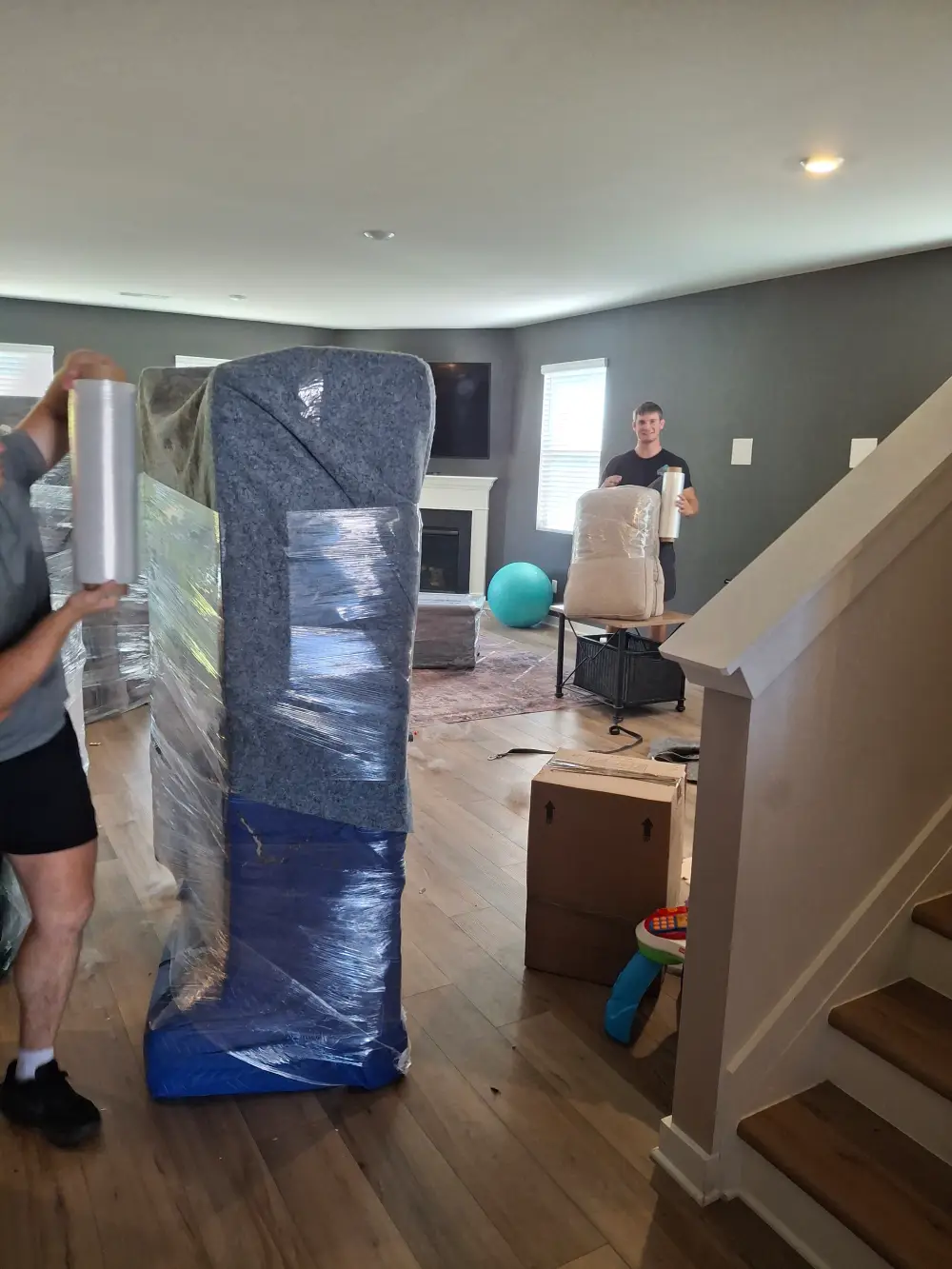
A lot of people underestimate how much professional packing & wrapping adds to the total, and also how much it's worth. Packing a three-bedroom house yourself takes days. Doing it wrong means broken items in transit. Professional packers bring the right materials, know how to protect fragile items, and work fast.
Expect to pay $300 to $600 for a one-bedroom, $600 to $1,200 for a two-bedroom, and $1,000 to $2,000 or more for a three to four bedroom home. That includes materials. If you supply your own boxes and just need labor, the cost drops.
One thing worth noting: if your mover packs your items, they typically carry more liability for damage. If you pack yourself, their liability is limited. That's a real consideration for long-distance moves where items spend more time in transit.
Furniture Disassembly and Reassembly Costs
Large furniture often can't go through doorways or up stairs without being broken down first. Bed frames, sectional sofas, large desks, and modular shelving all need to come apart before loading and go back together at the destination. Assembly & disassembly is sometimes included in a full-service quote, but not always. Ask specifically.
When priced separately, expect $50 to $150 per item depending on complexity. A full house with multiple beds, a sectional, and a few large pieces could add $300 to $600 to your total.
What You're Actually Paying For With a Professional Mover
Some people look at interstate moving prices and immediately think about renting a truck and doing it themselves. That's a valid option for small moves, but the math changes fast. A one-way truck rental from Nashville to Dallas for a two-bedroom apartment runs $800 to $1,500 before fuel. Add fuel (often $300 to $600 for that distance), packing supplies, and your time, and the gap between DIY and professional narrows quickly.
With a professional out-of-state moving service, you're paying for trained movers who know how to load a truck efficiently, protect your belongings, and handle the logistics of an interstate move. You're also paying for their equipment, their insurance, and their accountability if something goes wrong.
For families with a full household, the professional route usually wins on both cost and sanity. For a single person with minimal furniture, DIY can make sense.
Hidden Costs That Catch People Off Guard
The base quote is rarely the final number. Several costs catch people off guard, and knowing them in advance helps you budget accurately.
Watch out for these common add-ons and surprises:
- Long carry fees: If the truck can't park close to your door, movers charge extra for the additional distance they have to carry items.
- Elevator fees: Some companies charge extra for moves involving elevators, especially in apartment buildings.
- Storage in transit: If your new home isn't ready when the truck arrives, you may pay for temporary storage.
- Fuel surcharges: Some movers add these separately, especially on long hauls.
- Binding vs. non-binding estimates: A non-binding estimate can increase if your actual weight exceeds the estimate. Always ask for a binding quote.
- Valuation coverage: Basic liability coverage is minimal. Full value protection costs more but actually covers replacement value.
Moving From the Nashville Suburbs
Not everyone moving out of state is coming from inside Nashville proper. A significant number of moves originate from surrounding communities. If you're in Franklin or Murfreesboro, the pricing structure is essentially the same as Nashville. Distance is calculated from your actual pickup address, so being 20 to 30 miles outside the city adds a small amount to the total mileage but doesn't change the pricing model significantly.
What does matter is access. Suburban homes often have longer driveways, more stairs, or neighborhoods where large trucks have limited maneuverability. Mention these details when getting your quote.
How to Get an Accurate Quote
The only way to get a number you can actually rely on is to give the mover a complete inventory of what you're moving. Vague descriptions lead to vague estimates. A detailed room-by-room list, including large appliances, specialty items, and anything that needs special handling, gives the mover what they need to price accurately.
In-home estimates are the gold standard for larger moves. A mover who walks through your home can see exactly what's involved. Virtual surveys via video call have become common and work well for most situations. Phone estimates based on rough descriptions are the least reliable.
Get at least three quotes. Compare them carefully, not just on price but on what's included. A quote that looks $500 cheaper might not include packing materials, fuel, or valuation coverage that another quote bundles in.
If you're also dealing with items you don't want to take with you, handling junk removal before the move reduces your load and can lower your moving cost. Less weight means a lower bill on a weight-based interstate quote.
For more context on what families in the Nashville area typically deal with when planning a long-distance move, the details around what Nashville families should know about out-of-state moves covers the planning side in depth.
Timing Your Move to Control Costs
Interstate moving prices are not fixed year-round. Demand drives pricing, and demand peaks hard in the summer. May through August is the busiest season for movers nationwide. If you have flexibility, moving between October and March can save you 10 to 20 percent compared to peak season rates.
Within any given month, the end of the month is busier than the middle. Leases and closings cluster around the first and last few days of the month. Booking a mid-month move often means better availability and sometimes better pricing.
Booking early matters too. Last-minute moves in peak season are expensive and sometimes impossible to schedule with a reputable company. Six to eight weeks of lead time is reasonable for most interstate moves. More is better if you're moving in summer.
Frequently Asked Questions
How far in advance should I book an out-of-state move from Nashville?
Six to eight weeks is a solid minimum for most moves. If you're moving between May and August, push that to ten to twelve weeks. Good movers fill up fast during peak season, and waiting until the last minute limits your options and often raises your cost.
Is it cheaper to move myself versus hiring a Nashville moving company?
For small moves under 500 miles with minimal furniture, DIY can save money. For a full household moving more than 500 miles, the cost difference between renting a truck and hiring professionals often narrows to a few hundred dollars once you factor in fuel, supplies, and your time. The physical and logistical burden of driving a large truck across multiple states is also significant.
What's the difference between a binding and non-binding estimate?
A binding estimate locks in your price based on the inventory provided. If the actual weight comes in higher, you don't pay more. A non-binding estimate can increase if your shipment weighs more than estimated. Always ask for a binding estimate on interstate moves to avoid surprises at delivery.
Do interstate movers charge by weight or by the hour?
Interstate moves are almost always priced by weight and mileage, not by the hour. Hourly pricing is standard for local moving within the same metro area. Once you cross state lines, federal regulations govern how interstate movers price their services, and weight-based pricing is the standard model.
What happens if my new home isn't ready when the movers arrive?
This is more common than people expect. Most interstate movers offer storage in transit, where your belongings are held in a warehouse until your new home is ready. This typically costs $50 to $150 per day depending on the volume. Ask about this option and its cost before you sign anything, especially if your closing date or lease start is uncertain.
Get a Real Number for Your Nashville Out-of-State Move
Daniels Moving and Logistics LLC handles out-of-state moves from Nashville and the surrounding area with straightforward pricing and no runaround. Schedule Your Move Now to get a quote based on your actual inventory, or call us directly at 615-481-3098 to talk through your move and get real numbers fast.
‹ Back
Recent Posts
-

-

-

-
Commercial Property Emergency Pack-Out Services
October 6, 2026
-