Fine Art, Antiques, and Heirloom Furniture: How Elite Crews Protect High-Value Assets During a Local Move
The High Stakes of Premium Relocation
A 19th-century secretary desk that has been in your family for four generations is not furniture. It is an object with a history, a provenance, and a value that no insurance check fully replaces once it's damaged. The same is true for a custom oil painting commissioned for a specific wall, a grandfather clock with a movement that has been running for 80 years, or a set of dining chairs upholstered in fabric that no longer exists on the market.
Traditional moving companies are built to optimize for speed and volume. More jobs per day, more trucks on the road, faster turnaround — that model works fine for a starter apartment full of flat-pack furniture. It does not work for a Belle Meade estate with original art on every wall, a Brentwood home with a custom dining set, or a historic Franklin property where the staircase itself is part of the asset being protected.
Speed and volume create friction. Friction creates tears, dents, scuffs, and chips. On standard furniture, that's a cosmetic issue. On a 19th-century antique, it's a permanent loss of value and history that cannot be undone by a claims adjuster.
Daniel's Moving and Logistics optimizes for a different outcome entirely: pristine condition, start to finish. Every protocol in this guide exists because we have made a deliberate choice to move slower, wrap more thoroughly, and load more deliberately than a high-volume operation ever will — for the specific category of belongings where that difference matters most.
A moving company optimized for volume treats your grandmother's china the same way it treats a flat-screen television. An elite crew treats every item according to what it actually is — and what it would cost, in every sense, to lose it.
The Wrapping Protocol — Multi-Layer Defensive Engineering
Every high-value item that leaves a room in your home passes through the same sequence before it ever reaches the truck. This is not improvised on the spot based on what's available. It is a defined protocol, applied consistently, item by item.
The Baseline Blanket Wrap
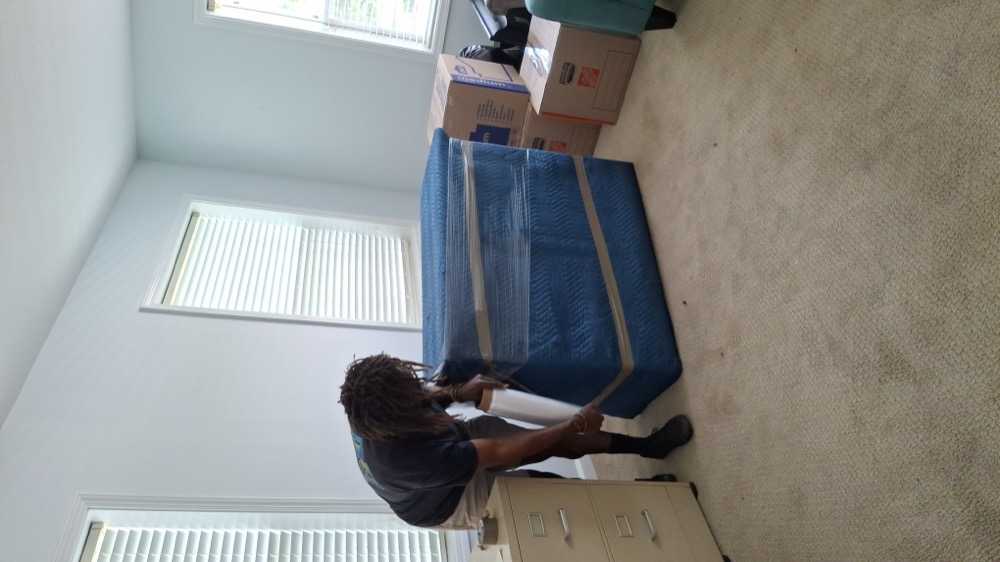
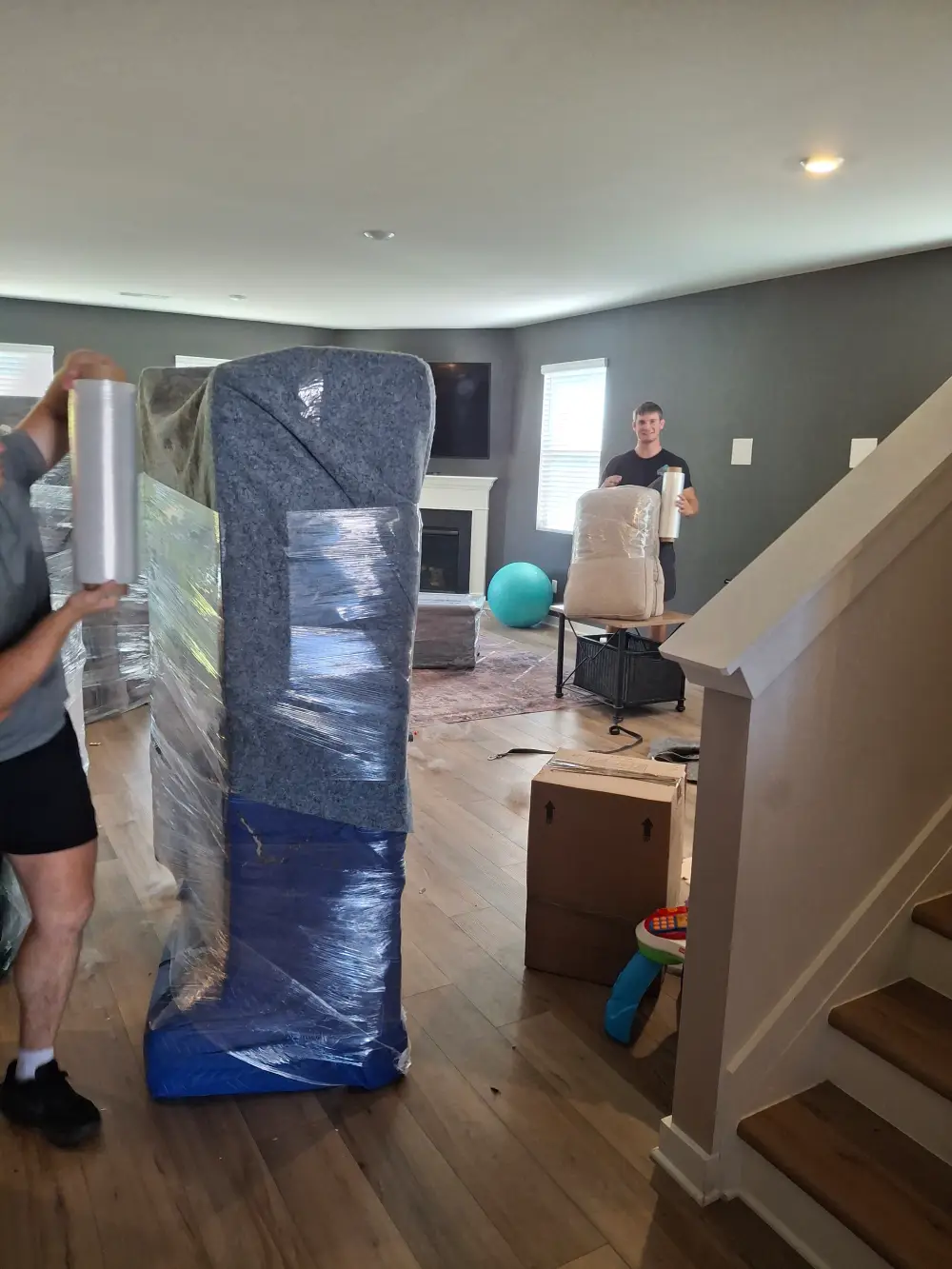
Every piece begins with thick, premium-grade quilted moving blankets — not the thin furniture pads sold at hardware stores, but heavyweight quilted blankets designed specifically to absorb vibrational shock during transit. Vibration is the silent damage mechanism in any move. A piece can travel three miles without a single collision and still arrive with hairline cracks in old finish or loosened joints from sustained low-frequency vibration through an unpadded truck floor. The quilted blanket layer is the first line of defense against that — it dampens vibration at the surface before it ever reaches the piece itself.
The Edge-Guard Strategy
Corners and edges are where damage actually happens. A custom dining table corner, the ornate carved edge of an antique frame, the delicate turned legs of a Federal-period chair — these are the points of an object most likely to make contact with a doorway, another piece of furniture, or the truck wall during a turn. We deploy heavy-duty cardboard corner guards on every exposed edge, corner, and leg before the blanket wrap goes on. This single step is the difference between a piece that arrives exactly as it left and a piece with a chip that a refinisher will tell you cannot be fully matched.
The Tensile Shrink-Wrap Seal
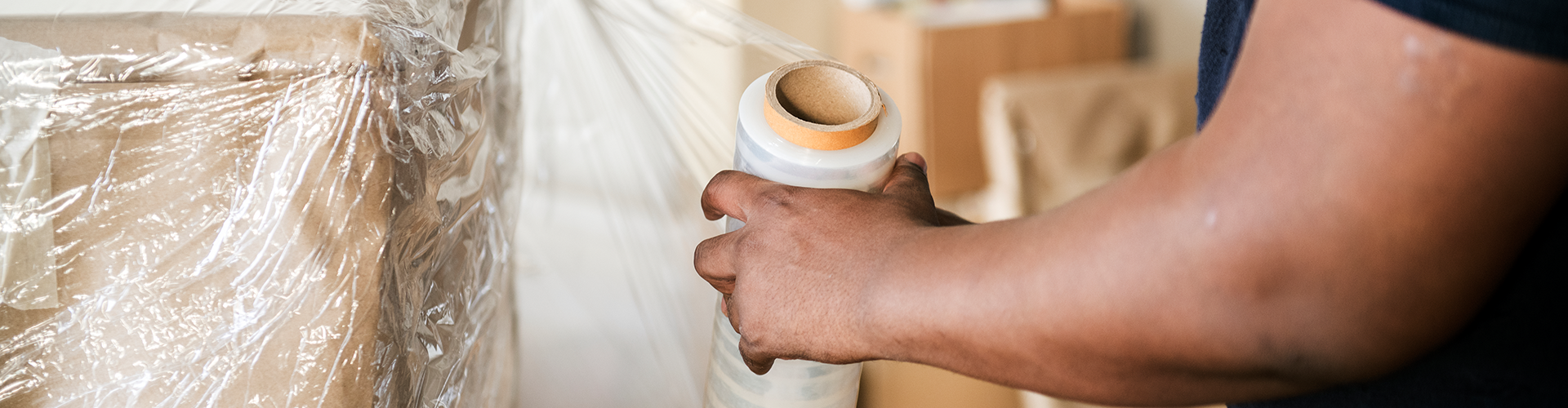
Once the blanket and edge-guard layers are in place, industrial shrink wrap locks the entire package down — tight enough that nothing shifts during transit, but applied over the padding, never directly against a wood or fabric surface. This sequencing matters: shrink wrap applied directly to a finished wood surface can pull at the finish or trap surface-level condensation. Applied over a blanket layer, it instead creates a sealed, weather-resistant package that protects against the humidity swings common during Middle Tennessee's summer moving season. The shrink-wrap seal is what allows a wrapped piece to sit in a staging area or travel through a hot truck cab without absorbing ambient moisture.
Fine Art and Mirror Shielding
Art and mirrors get their own protocol entirely, because flat glass and painted surfaces fail differently than furniture. Every mirror and framed piece that fits standard dimensions goes into a custom heavy-duty mirror box — corrugated, telescoping cartons designed specifically for flat, fragile items. Inside the box, the surface is protected with glassine paper — a non-abrasive, moisture-resistant paper specifically chosen because it will not stick to or transfer onto a painted or varnished surface even after prolonged contact.
For oversized custom art — pieces too large for standard mirror boxes — we build a multi-layer structural wrap on-site: glassine paper directly against the surface, foam padding over that, and a rigid cardboard or foam-core layer on the outside to prevent flexing. A canvas that flexes during transit can crack its paint layer permanently. The rigid outer layer exists specifically to prevent that flex.
The Physics of the Truck — Secure Vertical Staging
How a truck is loaded determines what survives the trip. This is where most of the visible damage from a 'careful' move actually originates — not from the wrapping, but from how wrapped items interact with each other and with the truck itself once the door closes and the vehicle starts moving.
Why Fine Art and Mirrors Never Travel Flat
Flat storage under any additional weight — even the weight of another wrapped item — creates point-pressure across a surface that was never designed to bear load. A flat-stored mirror or framed piece with even modest weight on top of it for a 30-minute drive can develop stress cracks in the glass or frame that don't become visible until days later. Fine art, mirrors, and delicate heirloom pieces in our trucks travel completely vertical — standing on edge, never flat, never with weight resting on the face of the piece.
Carpet-Padded Walls and E-Track Tie-Down Systems
Our trucks are outfitted with carpet padding along the interior walls — a permanent buffer between any item and the truck's metal frame. Vertical pieces are positioned directly against this padded wall and secured using commercial E-track tie-down systems: a track-and-strap system bolted into the truck's frame that allows every piece to be individually strapped at multiple points, completely isolated from any other item in the truck. Nothing leans against anything else. Nothing has the opportunity to shift, slide, or settle into another piece during transit — even on a route with stops, turns, and the inevitable Nashville traffic braking.
The Direct-Asset Model: One Crew, Start to Finish
Here is the operational detail that separates a genuinely elite move from one that only looks elite on the front end: the exact same background-checked crew that wraps your items is the crew that loads the truck, drives the truck, and unloads at the destination. There is no hand-off to a different driver. There is no transfer to a different crew at a warehouse. There is no broker coordinating between three different companies who have never worked together before.
Every hand-off in a move is a point where institutional knowledge about a specific fragile item gets lost. The crew that carefully wrapped a 200-year-old clock and knows exactly how it was positioned in the truck is the same crew that carries it into your new home and unwraps it. Nothing about how that piece needs to be handled has to be communicated to someone new partway through the process — because there is no one new.
Zero third-party hand-offs. Zero independent broker chaos. The crew that touches your great-grandmother's writing desk in the morning is the same crew that sets it down in its new home that afternoon.
Property Protection — Safeguarding the Estate Itself
Protecting what's inside your home means nothing if the move damages the home around it. The same precision applied to your antiques and art extends to the property itself — particularly in the estate properties and historic homes we regularly serve across Belle Meade, Brentwood, Franklin, Hendersonville, and Mount Juliet.
Hardwood Floor Protection: Every movement path is covered with dense, rubber-backed neoprene floor runners before a single item moves. This is not the thin paper-backed protection that slides under load — it is heavy rubber-backed material that stays anchored in place under the weight of a fully loaded dolly, protecting original hardwood, custom wide-plank flooring, and refinished surfaces from scuffs, scratches, and the grit that accumulates on moving day.
Door Jamb and Wall Corner Protection: Foam-padded door jamb protectors go on every entry point along the move path — front door, garage entry, every interior doorway a wrapped piece will pass through. Wall corner guards protect every corner adjacent to a carry path. In homes with original plaster — common throughout Belle Meade's older estates and Historic Downtown Franklin — this protection is non-negotiable. Plaster does not patch the way drywall does, and a chip in 100-year-old plaster requires a specialist, not a quick repair.
Narrow Staircase Navigation: Historic staircases — the kind found throughout Belle Meade's older homes and Franklin's National Register properties — were not built with modern furniture dimensions in mind. Before anything moves, we assess staircase width, landing turn radius, and railing fragility. If a piece cannot navigate a staircase without contact, it gets hoisted through an appropriate alternative — a window, an exterior route — rather than forced through a space that will damage both the piece and the staircase. The assessment happens before moving day, not during.
What We Specialize In — Our Operational Boundary
Daniel's Moving and Logistics specializes entirely in premium household goods, furniture systems, fine art, antiques, and full-service packing. We do not handle commercial gym equipment or outdoor playground sets. This is a deliberate boundary. The protocols described in this guide — multi-layer wrapping, vertical art staging, E-track securing, neoprene floor protection — require equipment, training, and time that a company trying to be everything to everyone cannot consistently maintain. Specialization is what makes the standard possible.
Secure Your Summer Moving Date — Before the Season Fills
Homeowners, collectors, and estate managers across Belle Meade, Brentwood, Franklin, Hendersonville, and Mount Juliet plan their moves around this exact level of care — and during peak summer season (May through August), the schedule that can accommodate a full-protocol move fills early. A move involving fine art, antiques, or heirloom furniture takes longer to execute properly than a standard move, which means it needs to be scheduled with that time built in from the start.
If you are planning a local move involving items that cannot be replaced — original art, family pieces with generational history, antiques with real provenance — the time to book is before your calendar forces a compromise on timing. We bring the full protocol to every move: multi-layer wrapping, vertical art staging, E-track securing, neoprene floor protection, and the same crew from first wrap to final placement.
Call 615-481-3098 or visit danielsmovingandlogisticsllc.com to secure your summer moving date and protect what can't be replaced.
Frequently Asked Questions: Protecting High-Value Assets During a Move
How do professional movers protect antiques and fine art during a local move?
Professional movers protect antiques and fine art using a multi-layer protocol: thick quilted moving blankets to absorb vibration, heavy-duty cardboard corner guards on all exposed edges and legs, and industrial shrink wrap applied over the padding to lock everything in place without contacting the item's surface directly. Fine art and mirrors are wrapped in glassine paper and placed in custom mirror boxes or multi-layer structural wrap for oversized pieces, then transported completely vertical — never flat — secured with commercial E-track tie-down systems against carpet-padded truck walls.
Why shouldn't fine art or mirrors be transported flat in a moving truck?
Flat storage under any additional weight creates point-pressure across a surface not designed to bear load, which can cause stress cracks in glass or frames that may not become visible until days after the move. Fine art, mirrors, and delicate heirloom pieces should always travel vertical, standing on edge, secured individually with tie-down straps so no weight rests on the face of the piece and no item can shift into another during transit.
What is an E-track tie-down system and why does it matter for moving valuables?
An E-track tie-down system is a track-and-strap system bolted into a moving truck's interior frame that allows individual items to be secured at multiple points, completely isolated from other items. For high-value pieces like fine art and antiques, this prevents any shifting, sliding, or contact between items during transit — even through stops, turns, and braking — which is one of the most common causes of in-transit damage to valuables.
What floor and property protection should movers use in historic or luxury homes?
Movers working in historic or luxury homes — including estates in Belle Meade, Brentwood, and Franklin — should use dense, rubber-backed neoprene floor runners on all hardwood surfaces, foam-padded door jamb protectors at every entry point, and wall corner guards throughout the move path. In homes with original plaster walls, additional corner protection is essential since plaster cannot be patched the way drywall can. Narrow historic staircases should be assessed before moving day to determine whether pieces can navigate safely or require an alternative route.
Does Daniel's Moving and Logistics handle fine art and antique moves in Belle Meade, Brentwood, and Franklin?
Yes. Daniel's Moving and Logistics provides specialty moving services for fine art, antiques, and heirloom furniture across Belle Meade, Brentwood, Franklin, Hendersonville, and Mount Juliet. Our protocol includes multi-layer blanket and shrink-wrap protection, vertical art staging with E-track securing, and a direct-asset model where the same background-checked crew handles wrapping, loading, transport, and unloading with zero third-party hand-offs. Call 615-481-3098 or visit danielsmovingandlogisticsllc.com for a free quote.
‹ Back
Recent Posts
-
-
-
-
Commercial Property Emergency Pack-Out Services
October 6, 2026
-