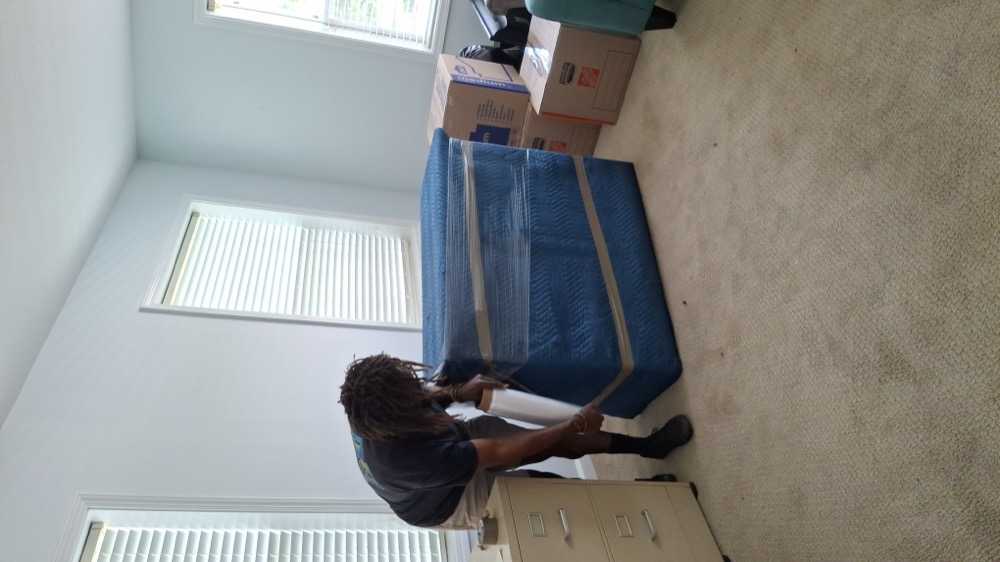


The 4-Bedroom House Packing Checklist: A Week-by-Week Summer Countdown
The Logistics of a 4-Bedroom Footprint
Most families underestimate what they're actually moving.
A standard 3-to-4 bedroom home in Middle Tennessee - whether it's a craftsman in Franklin, a new build in Mount Juliet, or a two-story in Murfreesboro - typically holds 8,000 to 12,000+ pounds of household goods. That's before you count the formal dining set, the kids' bunk beds, the kitchen packed with two decades of accumulated cookware, and the guest room that quietly became a storage unit.
Add in fragile heirloom pieces, fine art, large-screen TVs, and complex furniture systems that require partial or full disassembly, and you're not just "packing boxes." You're managing a physical inventory that takes real planning to protect and move efficiently.
Here's the hard truth about summer moves in Davidson, Williamson, Rutherford, and Wilson counties: attempting to pack a 4-bedroom home in the final week of July or August is a guaranteed path to broken belongings, blown budgets, and complete exhaustion. The heat index alone makes rushed packing physically grueling. Boxes packed in a panic get stacked wrong. Fragile items get wrapped inadequately. And "just one more trip" to Target for packing tape at 11 PM becomes a recurring nightmare.
This week-by-week countdown eliminates that chaos entirely. Whether you're relocating across Brentwood, moving from Hendersonville to a new district in Franklin, or making a first-time purchase in a fast-growing Rutherford County neighborhood, this blueprint gives you a clean, room-by-room progression that protects your belongings and keeps your family's daily routine intact until the very last moment.
The Timeline: A Week-by-Week Breakdown
Weeks 6 & 5: The Purge and Strategy Phase
Goal: Know exactly what you're moving - and eliminate everything else.
This is the most underutilized phase of any family move, and the one that saves the most money and time. Every item you don't move is a box you don't pack, don't load, don't transport, and don't unpack.
Week 6 Action Steps:
- Walk every room with a notepad or phone. Create a rough room-by-room inventory. Note large furniture pieces, fragile items, and anything that requires specialty handling (antiques, oversized artwork, collectibles, wine collections).
- Start the declutter sweep. Sort every room into three categories: Move it, Donate/sell it, and Trash it. Be ruthless about Category 1. If it hasn't been used in 18 months, it likely won't be used in the new home either.
- Schedule your moving company now. Summer moves in the greater Nashville metro book fast, especially on weekends. If you're in a high-demand corridor - Franklin, Brentwood, or any Williamson County address - slots fill weeks out. Lock in your date.
- Identify high-value assets that need specialty crews. Fine art, antique furniture, grandfather clocks, large mirrors, and delicate heirlooms should be flagged now so they can be scheduled for specialty wrapping and transport. Last-minute arrangements for these items are expensive and risky.
- Order packing supplies in bulk. For a 4-bedroom home, plan on a minimum of: 80-100 medium boxes, 20-30 large boxes, 20-30 small boxes, 10-15 wardrobe boxes, and 4-6 rolls of 3-inch packing tape per person packing. Add bubble wrap, packing paper, and foam corner protectors for fragile rooms.
Week 5 Action Steps:
- Finalize your donation and disposal runs. Furniture going to Habitat for Humanity ReStore, clothes to a local charity, electronics to a recycler - all of it should be scheduled and cleared this week, not the week of the move.
- Create your room-destination map. Draw or document a simple layout of the new home and assign a color code to each room. Use colored labels (red = master, blue = kids' room 1, yellow = kitchen, etc.) consistently throughout the packing phase. This pays dividends on unloading day.
- Source specialty boxes if needed. Dish pack boxes (with cell dividers), TV boxes, mattress bags, and mirror/picture frames boxes should be ordered this week if your moving company isn't supplying them.
Weeks 4 & 3: The Low-Frequency Rooms
Goal: Box up everything your family won't touch before moving day.
The strategic advantage of weeks 4 and 3 is that you're packing the spaces that have the least daily impact on your household: the formal dining room, the guest bedroom, the home office, seasonal storage, and attic contents. Your family can live normally while significant square footage gets cleared.
Week 4 Action Steps:
- Pack the formal dining room completely. China, crystal, serving platters, and centerpieces should be individually wrapped in unprinted packing paper (newsprint ink transfers onto dishes). Use dish pack boxes with cell dividers for stemware. Never stack more than 8-10 pounds per dish pack box. Plates should always be packed vertically - like records - not horizontally, which concentrates pressure and causes breakage.
- Pack the guest bedroom. Strip bedding, bag pillows in mattress/pillow bags, disassemble the bed frame, and box all closet contents. If the guest room has become secondary storage, sort and purge before packing.
- Pack the home office. Back up all computers and external drives before disconnecting anything. Label all cords with masking tape and a marker. Use original boxes for monitors if available; otherwise, double-wrap in bubble wrap and use snug-fitting medium boxes with packing paper fill.
- Use heavy-duty, double-walled boxes for books, records, and dense items. Single-wall boxes collapse under the weight of book collections. Keep book boxes to 35 lbs. maximum - they need to be liftable by one person safely.
Week 3 Action Steps:
- Clear attic and basement/storage areas. Holiday decorations, off-season sporting equipment, camping gear, and stored items should all be boxed, labeled with contents AND room destination, and stacked in the garage staging area.
- Pack off-season clothing. Winter coats in July, summer clothes in January - anything not in active rotation gets wardrobe-boxed or vacuum-sealed now.
- Begin disassembling secondary furniture. Bookcases, storage shelving units, and non-essential furniture pieces can be broken down, hardware bagged and taped to the frame, and moved to the staging area.
- Color-code and label every box on the top AND at least one side. Top labels get buried when boxes are stacked. Side labels keep inventory visible at a glance throughout the loading and unloading process.
Week 2: The Core Living Areas
Goal: Pack primary bedrooms and the kitchen without disrupting daily life until the last possible moment.
This is the highest-stakes packing week. The kitchen and primary bedroom contain the highest density of fragile items and the goods your family uses daily. The key is working systematically - room section by room section - so you're never fully without function.
Primary Bedroom:
- Start with the closet. Use wardrobe boxes to hang clothes directly - no folding and refolding required. Box shoes individually in packing paper and group by person. Jewelry and valuables should be packed in a personal bag you'll transport in your own vehicle.
- Pack dressers section by section. Soft items (socks, undergarments, t-shirts) can actually stay in the drawers during the move if the movers are wrapping the dressers - confirm this with your crew in advance. Otherwise, empty and box them.
- Protect the mattress. Mattress bags are non-negotiable. A 4-bedroom home typically has 3-5 mattresses. Exposed mattresses pick up every scuff, stain, and tear during a move.
- Disassemble bed frames and bag all hardware. Use a zip-lock bag taped directly to the headboard so hardware is never separated from the piece it belongs to.
Kitchen:
- Start with the items you use least frequently. Specialty appliances (bread makers, pasta machines, waffle irons), holiday serving pieces, and decorative items pack first.
- Wrap every fragile item individually. Every glass, every mug, every bowl gets its own sheet of packing paper before going into a dish pack box. Nesting unwrapped items causes chips and cracks. There are no shortcuts here.
- Keep a "last week kitchen" box. Set aside one pot, one pan, a handful of utensils, plates and cups for the family, the coffee maker, and whatever your household can't realistically live without for 7 days. Everything else packs now.
- Clear and clean the refrigerator. Plan to eat down the freezer aggressively starting this week. By move day, the refrigerator should be empty, unplugged, and defrosted. A wet refrigerator is a mold risk and a loading hazard.
Family and Living Areas:
- Dismantle and wrap the TV. Use the original box when possible. If unavailable, use a purpose-built TV box with foam corner inserts. Lay flat-screens in an upright position during transit - never flat on their face.
- Break down the sectional. Most modern sectionals separate into 2-4 individual pieces. Confirm this with your moving crew so they can plan load sequencing.
- Box media, books, and decor. The living room bookshelf, wall art, and decorative pieces are time-consuming. Start early in the week to avoid a crunch.
Kid's Bedrooms:
- Pack with the kids, not for them. Involving children in packing their own rooms - with clear rules about what goes in each box - reduces anxiety and keeps small toys from disappearing into random boxes.
- Mark toy boxes clearly. "Kids' Toys - Bedroom 1" should be the destination label, not just "Toys."
- Keep one small backpack per child with their most-used items unpacked until move day.
Week 1: Countdown and Essential Boxes
Goal: Finish packing, prep the home, and organize the final-day logistics.
By the start of week 1, your home should be 85-90% packed. This week is for finishing the stragglers, assembling your essentials boxes, and mentally transitioning from "living here" to "leaving here."
Monday-Tuesday:
- Finish all remaining rooms. Bathrooms pack fast - use small and medium boxes for toiletries, linens, and medicine cabinet contents. Medications and prescriptions travel in your personal vehicle.
- Confirm all logistics with your moving company. Verify the truck size, crew count, start time, and any add-on services (packing assistance, furniture wrap, appliance disconnect).
- Finalize childcare and pet arrangements for move day. Young children and pets in an active loading zone are a safety risk and a logistical complication. Arrange for them to be out of the home during the loading phase if at all possible.
Wednesday-Thursday:
- Assemble your "Open First" essentials boxes. Every adult and every child should have a labeled essentials box or bag that stays in a personal vehicle and arrives at the new home with you, not on the truck. Contents should include:
- Toiletries and medications
- Phone chargers and power banks
- A change of clothes for 2-3 days
- Bedding for the first night (one set per bed)
- Paper towels, a roll of trash bags, dish soap, and a sponge
- Snacks and a few easy meal options
- Kids' comfort items and a small toy selection
- Important documents (passports, birth certificates, insurance cards, closing paperwork)
- Disconnect and prep appliances. Confirm washer hoses are drained, dryers are disconnected, and dishwashers are cleared. If you're taking the refrigerator, it should already be empty and dry.
Friday (Day Before the Truck):
- Do a final walkthrough of every room. Open every cabinet, every closet, every drawer. Check the attic. Check the garage shelves. Items left behind after the truck leaves are either gone or require a second trip - neither is a good outcome.
- Stage all boxes in the primary loading zone. Stack boxes by room/color code in the garage or just inside the front entrance. This lets your moving crew build an efficient load plan without hunting through the house.
- Set aside personal vehicles and get them moved early. See the next section.
Move-Day Prep: Staging and Walkway Clearance
The night before the truck arrives is when the physical setup of your home either accelerates or derails your entire loading day. Crew efficiency on move morning is directly tied to what they walk into - and right now, you control that entirely.
Vehicle Staging: Driveway Access
A standard residential move for a 4-bedroom home requires a 26-foot box truck, and sometimes a second vehicle for overflow. That truck needs to get as close to your front entrance or garage as physically possible.
The night before, move every personal vehicle off the primary driveway. Park them down the street, in a neighbor's driveway, or at a nearby parking area - anywhere that's not between the truck and your door. An obstructed driveway forces hand-carts and moving crews to extend their carry distance, which adds time to every single load, multiplied across hundreds of items. On a hot summer morning in Middle Tennessee, that time and effort compounds fast.
If your home has a garage, clear a direct path from the garage to the street. Even if the crew isn't loading from the garage, it's often used as a staging and staging-point between the home interior and the truck.
Interior Walkway Clearance: The Loading Path
Your crew's efficiency depends on one thing: a clear, unobstructed path from every room to the truck ramp.
The night before, walk the likely load path yourself and clear it completely:
- Entry thresholds and front doorways - Remove all door mats, shoe racks, umbrella stands, and any decor placed near entryways.
- Hallways - No loose items, no last-minute boxes shoved against walls, no stacked trash bags. Every hallway should be wide and clear enough for a moving dolly to pass without maneuvering.
- Stair landings - On two-story homes, stair landings are a choke point. Remove anything stored on or near landings. Secure loose handrail components if relevant.
- Garage floor - Clear a clean path from the interior door through the garage to the driveway. This becomes the primary loading corridor.
- Bag all trash the night before and move it to the curb or a roll-off. Loose trash bags left inside the house during a move become a hazard and slow everything down.
Skip the Burnout. Let Us Handle It.
If reading through this checklist made you realize you'd rather someone else do the heavy lifting - literally and figuratively - that option exists.
Our professional crew arrives at your home with all the materials, equipment, and expertise to wrap, pack, and transport your entire 4-bedroom home in a single day. No six-week countdown, no 11 PM runs to the store, no Sunday afternoon back pain.
Families across Franklin, Brentwood, Murfreesboro, Hendersonville, and Mount Juliet.
‹ Back
Recent Posts
-

-
-

-
Commercial Property Emergency Pack-Out Services
October 6, 2026
-