


How Nashville Movers Keep Multi-Stop Moves Organized
Most people think moving to one address is chaotic enough. Add two or three stops into the equation and you've got a logistics nightmare waiting to happen. But professional movers in Nashville have seen it all — storage units, split households, phased relocations — and they've built systems to handle the chaos without breaking a sweat. The difference between a smooth multi-stop move and a complete disaster comes down to process, not luck.
You can't wing a move with multiple destinations. Every box has to land in the right place. Every timeline has to sync up. And every piece of furniture needs to get off the truck at the exact stop it's meant for. That's where the pros separate themselves from amateurs with a rental truck and a prayer.
The Route Gets Mapped Before Anything Gets Loaded
Nashville movers don't just show up and figure it out as they go. They plot every stop in advance, factoring in distance, access restrictions, and unloading time at each location. That means knowing which address comes first, what's getting dropped where, and how long each stop should realistically take. Without that roadmap, you're just guessing — and guessing costs time and money.
GPS helps, but it's not the whole answer. Traffic patterns shift. Parking situations vary. Some buildings have loading docks, others have narrow stairwells and no elevator. The best movers scout the route ahead of time or pull from experience with those exact addresses. They know which stops will be quick and which ones need extra crew or equipment.
Color Codes and Labels Do the Heavy Lifting
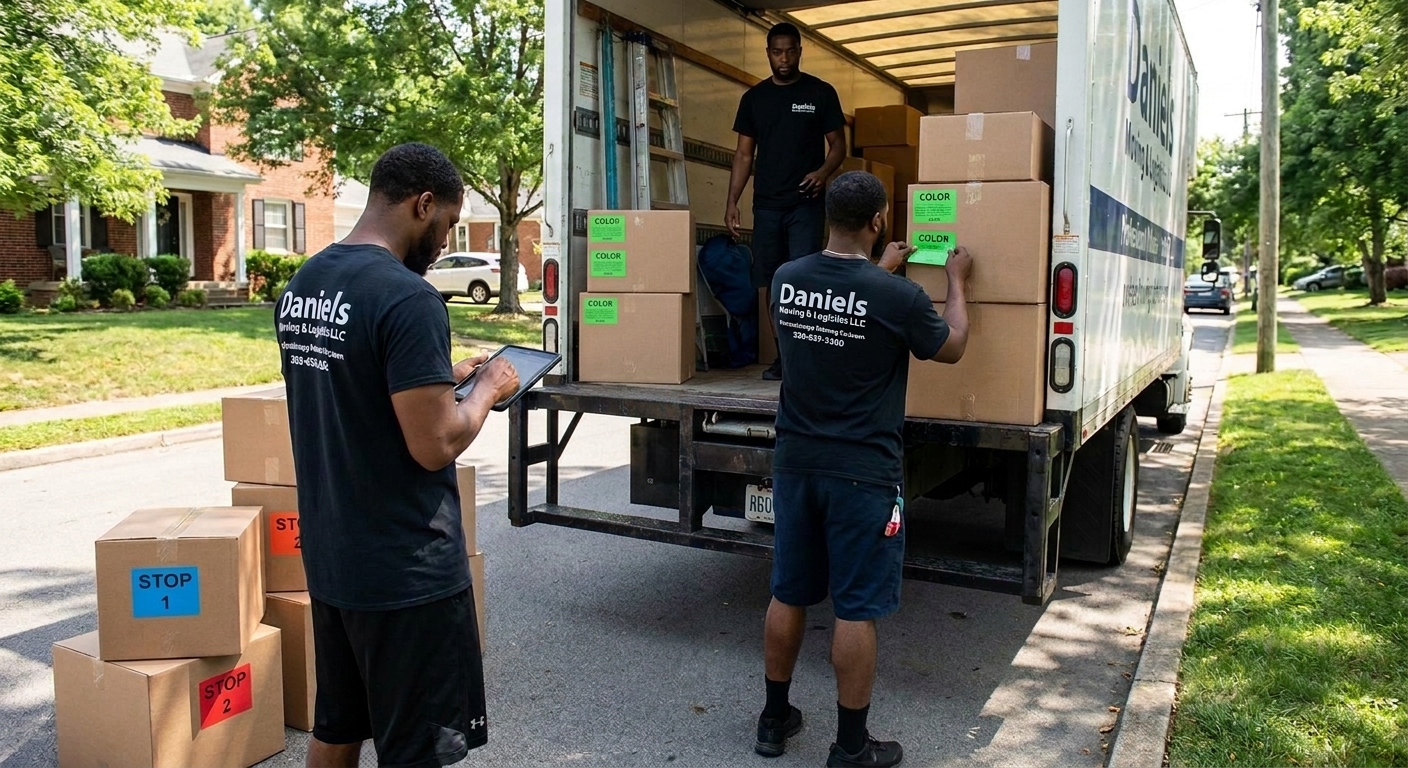
You can't rely on memory when you're hauling hundreds of items across town. That's why pro movers use visual systems — color-coded tape, numbered labels, location tags — to mark every box and piece of furniture for its intended destination. One glance tells the crew whether something stays on the truck or gets unloaded at stop two.
This isn't just about convenience. It's about accuracy under pressure. When you're working fast and the client's watching the clock, you don't have time to dig through inventory sheets or second-guess where the dining table goes. The label says it all. And if something's marked wrong, it gets caught before it hits the truck.
Load Order Determines How Fast Each Stop Goes
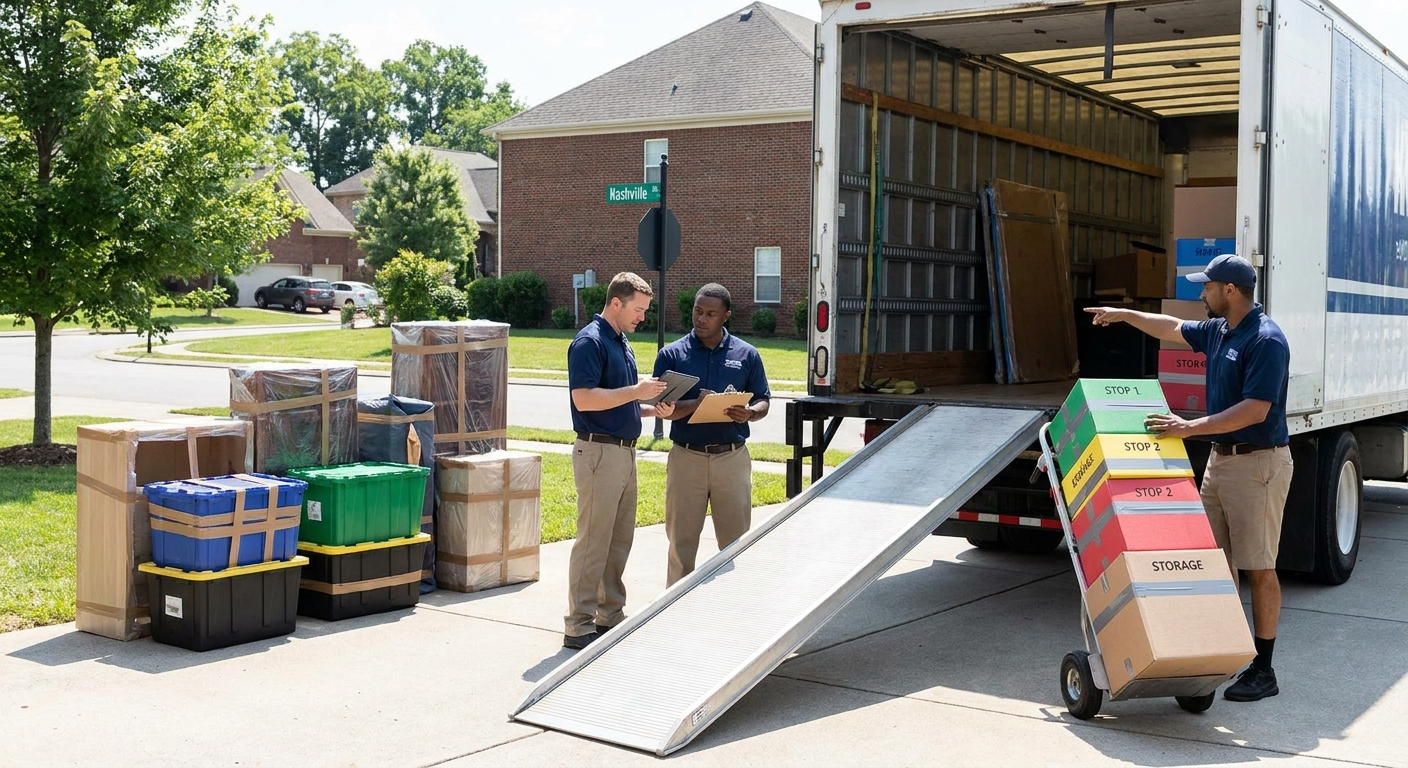
The way a truck gets packed makes or breaks a multi-stop move. Items for the first stop go in last, closest to the door. Stuff for the final destination gets loaded first, deep in the truck. That way, unloading happens in reverse order without having to shuffle everything around at each address.
Here's how the best crews structure their loads:
- Final destination items are packed tight against the front wall
- Mid-stop furniture and boxes layer in next, grouped by room or category
- First-stop items sit near the door for quick access
- Fragile or oddly shaped pieces get secured separately to avoid damage
- Tools and equipment stay accessible throughout the entire route
Skip this step and you'll waste hours pulling boxes off the truck just to reach the couch that was supposed to come off first. Good movers treat packing like Tetris with a purpose.
Inventory Sheets Track Every Single Item
Pro movers don't trust their memory or rely on rough estimates. They document everything — what's on the truck, where it's going, and what condition it's in before it gets loaded. That inventory becomes the backbone of the entire move, especially when multiple stops are involved.
Each stop gets its own section on the sheet. As items come off the truck, they're checked against the list. If something's missing or ends up at the wrong location, the paper trail catches it. And if a client disputes what was delivered, the documentation settles it fast.
Communication Between Crew and Client Stays Constant
Movers who go silent during a multi-stop job are asking for trouble. The best crews keep clients updated at every stage — when they're leaving one location, how long until the next stop, if anything's running behind. That transparency builds trust and keeps everyone aligned.
Here's what solid communication looks like on move day:
- Text or call before arrival at each stop
- Confirm what's getting unloaded and where it's going inside
- Flag any access issues or delays immediately
- Walk through completed stops to verify everything landed correctly
- Update the timeline if something shifts mid-move
Clients appreciate knowing what's happening. And movers who communicate well head off problems before they escalate into complaints or missed items.
Crew Size Matches the Scope of the Job
You can't run a three-stop move with a two-person crew and expect it to stay organized. Nashville movers scale their teams based on volume, timeline, and complexity. More stops mean more coordination, more unloading, and more chances for something to slip through the cracks.
A well-staffed crew keeps the move efficient. One person can handle inventory while others load and unload. If a stop takes longer than expected, extra hands keep things moving instead of grinding to a halt. Under-staffing a multi-stop move is like trying to run a restaurant with one cook — it might work, but it won't be pretty.
Backup Plans Exist for When Things Go Sideways
Even the tightest plan hits snags. A building elevator goes out. A storage unit has the wrong access code. A client changes their mind about what goes where. Pro movers expect these curveballs and have contingencies ready.
That might mean carrying extra packing materials, keeping a second vehicle on standby, or having a supervisor available by phone to make quick calls. Flexibility isn't optional when you're juggling multiple destinations. The crews that adapt fast keep the move on track. The ones that panic or shut down turn a minor hiccup into a full-blown disaster.
Post-Move Walkthroughs Close the Loop
The job isn't done when the last box hits the floor. Pro movers walk through each location with the client, confirming that everything arrived as planned. They check inventory sheets, verify placement, and address any concerns on the spot.
Here's what a solid walkthrough covers:
- All items from the inventory list are accounted for
- Furniture and boxes are in the correct rooms
- No damage occurred during transport or unloading
- Client has no outstanding questions or issues
- Paperwork is signed off and finalized
This step protects both the mover and the client. It catches mistakes early, prevents disputes later, and gives everyone confidence that the move went as planned.
Tech Tools Keep Everything Synced
Modern moving companies use software to track inventory, manage schedules, and communicate with clients in real time. Mobile apps let crews update delivery status at each stop. GPS systems monitor trucks so dispatchers know exactly where the team is and whether they're on schedule.
These tools aren't just flashy extras. They're what keep multi-stop moves from falling apart. When a crew can pull up the inventory on a tablet, confirm which items go where, and log completion instantly, the whole operation runs smoother. Paper-based systems work, but they're slower and leave more room for error.
Experience Turns Chaos Into Routine
You don't learn how to handle multi-stop moves by reading a manual. You learn by doing them — over and over, in every kind of scenario. Nashville movers who specialize in complex relocations have seen it all. They know how to pack a truck for five stops. They know which neighborhoods have tricky parking. They know how to keep a timeline from collapsing when something unexpected pops up.
That experience is what you're paying for. It's the difference between a team that panics when the elevator's broken and one that switches to the stairs without missing a beat. It's the reason some moves feel seamless while others feel like a never-ending string of problems.
Why Shortcuts Cost More in the Long Run
Some movers cut corners to save time or money. They skip the labeling. They guess at load order. They understaff the crew. And then they wonder why items end up at the wrong stop or clients call with complaints an hour after the truck leaves.
Here's what happens when organization falls apart:
- Boxes get delivered to the wrong address and have to be rerouted
- Unloading takes twice as long because nothing's where it should be
- Damage occurs when items aren't secured properly
- Clients lose trust and leave negative reviews
- Crews waste hours fixing mistakes instead of finishing the job
The upfront effort to stay organized isn't just about looking professional. It's about protecting your reputation, keeping clients happy, and making sure the job actually gets done right.
Multi-Stop Moves Demand More, Not Less
Every additional stop multiplies the complexity. More addresses mean more coordination, more chances for error, and more pressure on the crew to stay sharp. Nashville movers who excel at these jobs don't treat them like standard relocations with a few extra steps. They approach them as entirely different operations that require planning, precision, and the ability to adapt when things don't go exactly as scripted. That's what keeps everything on track when most people would be drowning in chaos.
Let’s Make Your Multi-Stop Move Simple
We know that every move comes with its own set of challenges, especially when there are multiple stops involved. That’s why we’re committed to handling the details so you can focus on settling in. If you’re ready for a move that’s organized from start to finish, let’s talk about your needs and get your plan in motion. Call us at 615-481-3098 or schedule your move now—we’re here to make your next move the easiest one yet.
‹ Back
Recent Posts
-

-
-
How Nashville Movers Keep Multi-Stop Moves Organized
November 6, 2026
-

-